Buy message.uk ?
We are moving the project
message.uk .
Are you interested in purchasing the domain
message.uk ?
domain@kv-gmbh.de · 0541-91531010
Buy message.uk ?
What is equivalence?
Equivalence refers to the state of being equal or interchangeable in value, function, or meaning. In mathematics, equivalence is used to denote that two expressions or equations have the same value or meaning. In other contexts, equivalence can refer to the similarity or comparability of two things. Overall, equivalence implies a relationship of equality or similarity between two or more entities. **
Is equivalence transformation allowed?
Yes, equivalence transformation is allowed in mathematics. It involves manipulating an equation or expression by applying operations that do not change the solution set of the equation. This can include adding or subtracting the same quantity to both sides of an equation, multiplying or dividing both sides by the same non-zero number, or applying other algebraic operations that preserve the equality of the original equation. Equivalence transformations are commonly used to simplify equations, solve for unknown variables, or prove mathematical statements. **


Similar search terms for Equivalence
Top-Angebote
Products related to Equivalence:
-
Garmin Bounce 2 43mm Kids Smart Watch GPS LTE Calling Messaging AMOLED 4GB 5 ATM - TurquoiseThe Garmin Bounce 2 is a feature packed kids smart watch designed to help children stay connected while giving parents useful safety and location features. With LTE connectivity, children can make calls, send text and voice messages and communicate with approved contacts without needing to carry a smartphone. An LTE subscription plan is required for cellular communication and related connected features. Real time GPS location tracking through the Garmin Jr. app allows parents to check their child's whereabouts. The watch also includes LiveTrack location sharing, location boundaries, assistance features and emergency contacts, providing additional peace of mind when children are at school, travelling or enjoying outdoor activities. The bright 1.2 inch AMOLED colour touchscreen provides a clear and vibrant display with a 390 x 390 pixel resolution. The touchscreen interface is designed to make everyday features easy to access, while the built in speaker and microphone support calls and voice messaging. The Bounce 2 includes activity and fitness tracking features such as steps, distance, sleep, running, walking, cycling and swimming. Built in GPS can track supported outdoor activities, while school mode, chores, rewards, games and task timers provide additional child focused features. With 4GB of internal storage, Wi-Fi, Bluetooth and NFC connectivity, the Garmin Bounce 2 offers a wide range of smart features in a compact design. Its 5 ATM water rating and rechargeable battery with up to 2 days of battery life make it suitable for everyday use, school activities and outdoor adventures.203,99 £*Shipping: 0,00 £Secure redirect to the provider
-
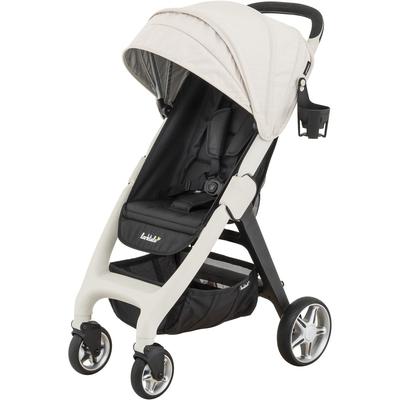
Larktale Chit Chat Compact Stroller Winter Bundle - Cottesloe Cream / BlackWeighs only 14.5 lbs!! The multi-award winning chit chat stroller is a distinctive and highly maneuverable stroller that folds flat in seconds. By using a unique recyclable fiber infused nylon, the chit chats SpaceFrame is constructed to be...179,99 $*Shipping: 0,00 $Secure redirect to the provider



-
What are equivalence classes?
Equivalence classes are sets of elements that are considered equivalent based on a specific relation or criteria. In mathematics, equivalence classes are used to partition a set into subsets where each element in a subset is considered equivalent to every other element in that subset. Equivalence classes help to simplify complex structures and make it easier to analyze and understand relationships between elements. **
-
Does this equivalence hold?
Without knowing the specific equivalence being referred to, it is difficult to provide a definitive answer. Equivalences in mathematics and logic are typically proven through rigorous reasoning and logical deduction. It is important to carefully examine the definitions and properties of the elements involved in the equivalence to determine if it holds true. Without further information, it is not possible to determine if the equivalence holds. **
-
What are equivalence relations?
Equivalence relations are a type of relation between elements of a set that satisfy three properties: reflexivity, symmetry, and transitivity. Reflexivity means that every element is related to itself. Symmetry means that if one element is related to another, then the other is related to the first. Transitivity means that if one element is related to a second, and the second is related to a third, then the first is related to the third. Equivalence relations are important in mathematics and other fields because they allow us to classify elements of a set into distinct equivalence classes based on their relationships with each other. **
-
Are equivalence classes equal?
Equivalence classes are not equal in the sense that they may contain different elements. However, equivalence classes are equal in the sense that they represent the same set of elements that are equivalent under a given equivalence relation. In other words, two equivalence classes are equal if they contain the same elements that are related to each other in the same way according to the equivalence relation. **

What are equivalence points?
Equivalence points are the points in a titration where the amount of titrant added is stoichiometrically equivalent to the amount of analyte present in the sample. At the equivalence point, the reaction between the titrant and analyte is complete, and the solution is in its most stable state. This is often indicated by a sharp change in pH or a color change in the solution. The equivalence point is used to determine the concentration of the analyte in the sample. **
Can you determine all equivalence classes with respect to this equivalence relation?
No, I cannot determine all equivalence classes with respect to the equivalence relation without knowing the specific relation in question. The equivalence classes depend on the specific definition of the relation and the elements involved. Each equivalence class represents a set of elements that are related to each other according to the given relation. **
Top-Angebote
Products related to Equivalence:
-
What is equivalence?
Equivalence refers to the state of being equal or interchangeable in value, function, or meaning. In mathematics, equivalence is used to denote that two expressions or equations have the same value or meaning. In other contexts, equivalence can refer to the similarity or comparability of two things. Overall, equivalence implies a relationship of equality or similarity between two or more entities. **
-
Is equivalence transformation allowed?
Yes, equivalence transformation is allowed in mathematics. It involves manipulating an equation or expression by applying operations that do not change the solution set of the equation. This can include adding or subtracting the same quantity to both sides of an equation, multiplying or dividing both sides by the same non-zero number, or applying other algebraic operations that preserve the equality of the original equation. Equivalence transformations are commonly used to simplify equations, solve for unknown variables, or prove mathematical statements. **
-
What are equivalence classes?
Equivalence classes are sets of elements that are considered equivalent based on a specific relation or criteria. In mathematics, equivalence classes are used to partition a set into subsets where each element in a subset is considered equivalent to every other element in that subset. Equivalence classes help to simplify complex structures and make it easier to analyze and understand relationships between elements. **
-
Does this equivalence hold?
Without knowing the specific equivalence being referred to, it is difficult to provide a definitive answer. Equivalences in mathematics and logic are typically proven through rigorous reasoning and logical deduction. It is important to carefully examine the definitions and properties of the elements involved in the equivalence to determine if it holds true. Without further information, it is not possible to determine if the equivalence holds. **
Similar search terms for Equivalence
-
Garmin Bounce 2 43mm Kids Smart Watch GPS LTE Calling Messaging AMOLED 4GB 5 ATM - TurquoiseThe Garmin Bounce 2 is a feature packed kids smart watch designed to help children stay connected while giving parents useful safety and location features. With LTE connectivity, children can make calls, send text and voice messages and communicate with approved contacts without needing to carry a smartphone. An LTE subscription plan is required for cellular communication and related connected features. Real time GPS location tracking through the Garmin Jr. app allows parents to check their child's whereabouts. The watch also includes LiveTrack location sharing, location boundaries, assistance features and emergency contacts, providing additional peace of mind when children are at school, travelling or enjoying outdoor activities. The bright 1.2 inch AMOLED colour touchscreen provides a clear and vibrant display with a 390 x 390 pixel resolution. The touchscreen interface is designed to make everyday features easy to access, while the built in speaker and microphone support calls and voice messaging. The Bounce 2 includes activity and fitness tracking features such as steps, distance, sleep, running, walking, cycling and swimming. Built in GPS can track supported outdoor activities, while school mode, chores, rewards, games and task timers provide additional child focused features. With 4GB of internal storage, Wi-Fi, Bluetooth and NFC connectivity, the Garmin Bounce 2 offers a wide range of smart features in a compact design. Its 5 ATM water rating and rechargeable battery with up to 2 days of battery life make it suitable for everyday use, school activities and outdoor adventures.203,99 £*Shipping: 0,00 £Secure redirect to the provider
-
Larktale Chit Chat Compact Stroller Winter Bundle - Cottesloe Cream / BlackWeighs only 14.5 lbs!! The multi-award winning chit chat stroller is a distinctive and highly maneuverable stroller that folds flat in seconds. By using a unique recyclable fiber infused nylon, the chit chats SpaceFrame is constructed to be...179,99 $*Shipping: 0,00 $Secure redirect to the provider
-
Larktale Chit Chat Compact Stroller Winter Bundle - Barossa Red / BlackWeighs only 14.5 lbs!! The multi-award winning chit chat stroller is a distinctive and highly maneuverable stroller that folds flat in seconds. By using a unique recyclable fiber infused nylon, the chit chats SpaceFrame is constructed to be...149,99 $*Shipping: 0,00 $Secure redirect to the provider
-
What are equivalence relations?
Equivalence relations are a type of relation between elements of a set that satisfy three properties: reflexivity, symmetry, and transitivity. Reflexivity means that every element is related to itself. Symmetry means that if one element is related to another, then the other is related to the first. Transitivity means that if one element is related to a second, and the second is related to a third, then the first is related to the third. Equivalence relations are important in mathematics and other fields because they allow us to classify elements of a set into distinct equivalence classes based on their relationships with each other. **
-
Are equivalence classes equal?
Equivalence classes are not equal in the sense that they may contain different elements. However, equivalence classes are equal in the sense that they represent the same set of elements that are equivalent under a given equivalence relation. In other words, two equivalence classes are equal if they contain the same elements that are related to each other in the same way according to the equivalence relation. **
-
What are equivalence points?
Equivalence points are the points in a titration where the amount of titrant added is stoichiometrically equivalent to the amount of analyte present in the sample. At the equivalence point, the reaction between the titrant and analyte is complete, and the solution is in its most stable state. This is often indicated by a sharp change in pH or a color change in the solution. The equivalence point is used to determine the concentration of the analyte in the sample. **
-
Can you determine all equivalence classes with respect to this equivalence relation?
No, I cannot determine all equivalence classes with respect to the equivalence relation without knowing the specific relation in question. The equivalence classes depend on the specific definition of the relation and the elements involved. Each equivalence class represents a set of elements that are related to each other according to the given relation. **
* All prices are inclusive of VAT and, if applicable, plus shipping costs. The offer information is based on the details provided by the respective shop and is updated through automated processes. Real-time updates do not occur, so deviations can occur in individual cases. ** Note: Parts of this content were created by AI.